Encore - Chapter Two
Chapter Two

Encore is a continuing story centered around a fraudulent mentalist and a spirit trapped between life and death for ninety-seven years, set in Victorian London, 1890. To jump to the Table of Contents and start from the beginning, Tap Here
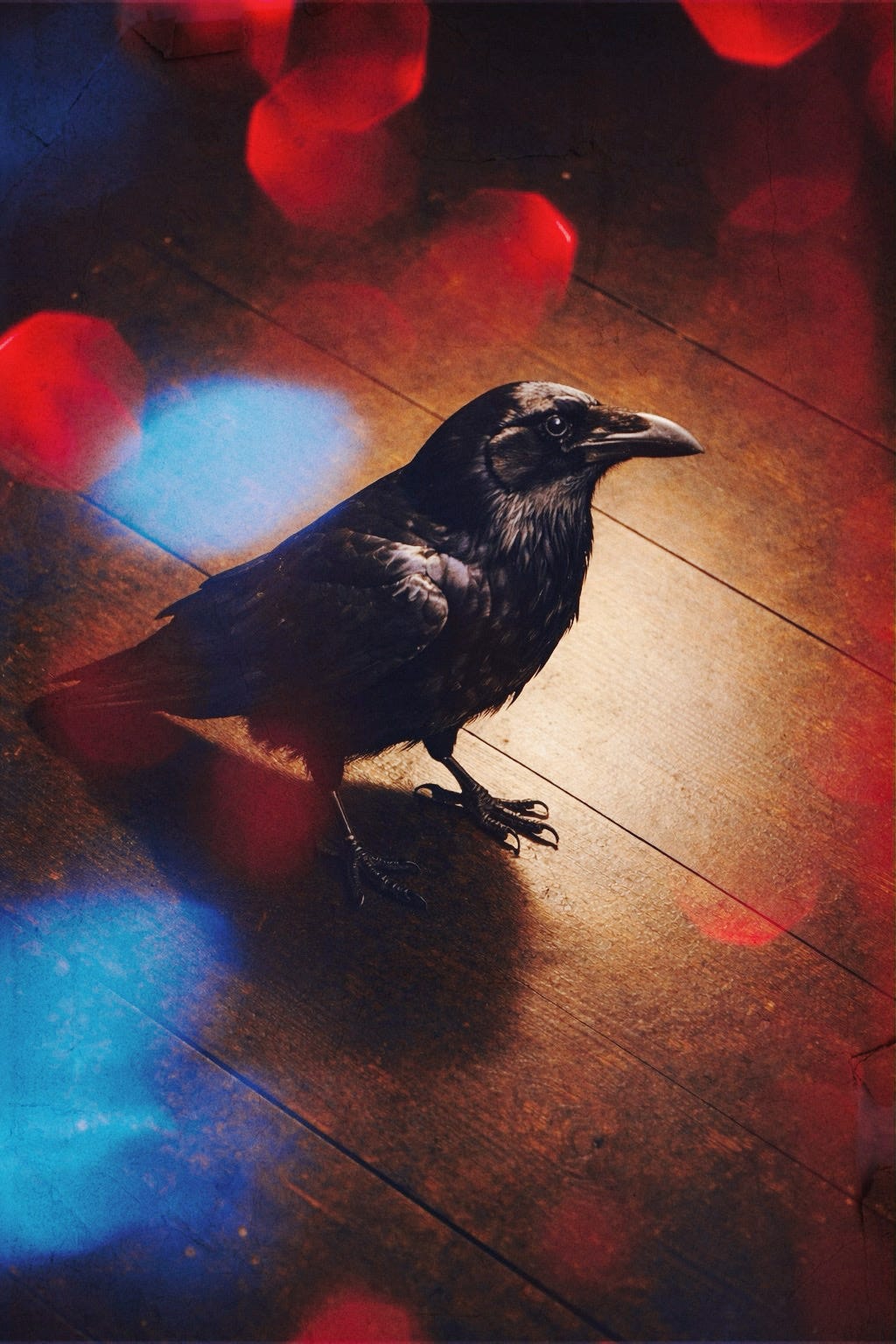
Encore - Chapter Two
A tremor in the distant night sky rolled like the first sign of a storm, a physical force shaking windows before any sound could be heard. The rumble held without fading, gliding over rooftops and sweeping between chimneys, persistent and steady.
It partnered with a moon that shone almost complete, round enough to command the sky with its light pressed against the same rooftops over which the rumble rolled.
Gradually the vibration found contour and shape, making the air feel compressed. It built slowly before breaking open into full sound, a reverberating thunder, though it did not emerge as impact; it was transformation, threading through London’s skyline where fog-slicked slate rooftops gleamed like black mirrors, and chimney stacks and gabled dormers appeared as broken teeth against the gray night sky.
This whisper-roar rumble, now no longer weather, unraveled into dozens of wings beating in chaotic rhythm, drumming collectively and building to a crescendoed percussion of scattered wingbeats, accented with the softer rustle of air through feathers.
Ravens.
The flock flew loose but deliberate, pulling together in the suggestion of a triangle. The unkindness cut through the sky, chimney smoke and mist splitting from the collective shape like a scalpel through skin. For a moment, their path appeared visible, a dark incision drawn across the sky.
In a narrow alley three blocks from the Adelphi Theater, the ravens descended, spiraling downward into the darkness and converging in a vortex of black wings circling fast, then faster.
They began to merge, the wingbeats settling into a rustle of thousands of feathers, each bird finding its place in the pattern. The shapes coalesced, each bird losing its edge while each dark form blurred and flowed into another. With a sound like rushing water and wind, wings and feathers concentrated into dark cascading hair, porcelain skin, and satin brocade.
Vivienne Ashwood materialized.
In the first instant, she was translucent, barely more present than she had been for ninety-seven years. Barely more present, even, than the mentalist she had only just left at the Adelphi theater three blocks away.
Materiality then began flooding into her like wine pouring into a glass. Her feet touched the cobblestones paving the alley’s floor. She felt her stability inside the leather of her boots. Along with the weight returning to her body, she felt the physical vitality and reality of existing fully in three-dimensional space.
She took a breath and the air rushed into her lungs, the surge so overwhelming she nearly collapsed. It was cold air, thick fog, coal smoke, and myriad other scents of the London night: baking bread, wet stone, horse dung. She could taste it all, could feel it filling her revived lungs. Her hands flew to her chest, feeling her body rise and fall. She felt the steady rhythm of her beating heart moving beneath her palms. Each pump unfurled through her like a tide. She closed her eyes, relishing the shudder of life underneath her skin, the first she’d felt in a century.
“It’s beautiful,” she said. The sound of her own voice made her laugh. Her ebullience echoed off the alley walls, bouncing back to her ears. Vivienne lifted a hand to her throat, actually feeling the vibration of sound borne from within her neck, each rapturous pulse a long-awaited proof of her becoming. She stood in the alley, breathing and laughing, feeling the air condense on her skin and the cold seep though her dress, relishing the weigh of her soft hair on her neck.
Vivienne smiled at a crooked lantern post located at the alley’s entrance, bent like a broken spine, its glass cracked like a frozen spider-web. Its warm flickering gaslight painted her shadow across the wet alley. Even this broken thing appeared beautiful when one could inhabit a body with which to perceive it.
It came without warning, a sensation so intense Vivienne’s knees buckled. She caught herself against the wall, feeling the rough texture of the brick as her thirsting mouth filling all at once with saliva. Her senses exploded outward: she smelled the overwhelming presence of blood, gallons of it, pumping though bodies all around her. Every person within two blocks suddenly became a beacon of vital aliment. She could hear heartbeats like drums: rapid flutter of a running child, steady rhythm of a walking man, slower pulse of an elderly woman.
Simultaneously, Vivienne’s vision sharpened into primal duality, the London midnight gray receding and falling away as her surroundings became a map of heat and cold. Approaching the alley’s entrance where she now stood, a man seemed to burn like a bonfire with the heat of life, of blood—everything her new body screamed that it needed. For nearly a century, she had been neither living nor dead, her body requiring little, as she had been barely perceptible. She was now undeniably real, and her body needed fuel for her own fire. Magnified by nearly a century of latency, and enhanced by her transformation, the hunger seized her throat.
Her sights set on him. An oblivious man of about forty drew closer, his shuffling footsteps reverberating in the alley’s entrance. Vivienne could register the shift of air from his nose and smell his mouth’s exhalation, tracking his pulse through his carotid artery.
Lord Edmund Hartwell walked fully into view now, lit by the light of the nearby crooked lantern post. Of average height and lumbering, he was talking to himself in the animated way of the fully drunk and thoroughly delighted. “Extraordinary performance! Simply Extraordinary! The transformation, the ravens, the sheer theatrical audacity of it!” He laughed and shook his head with rapturous awe.
Vivienne recognized he was recalling the very performance she had just given at the Adelphi theater, the one she had shaped from breath to reality. She was the reason for his adulation. But her hunger immediately surged, and Vivienne’s vision narrowed to a single point: the pulse in Hartwell’s throat, visible even in the darkness, life beating just beneath his skin. Every sense she possessed focused on that single point with the precision of a predator.
Vivienne’s hand shot out, and before the man could blink, she had him by the shoulder, pulling him into the alley’s shadow with her. She looked into his widened eyes, the surprise in them turning to fear.
“I—” Hartwell started to protest.
She struck with the quickness of a viper. Vivienne’s teeth found his throat, tearing through to the artery she’d been tracking from the moment she’d sensed him. Blood burst hot against her lips, a dark sugar-rust sweentness clinging to her palate, flooding her mouth with heat. It moved across her tongue, sliding down her throat, then flaring in her chest like fire through frozen veins. Each swallow, lush and arterial in ruinous rapture, seared a path into her body, unfurling until every dormant vein lit up in slow, voluptuous fire.
She drank, a forbidden vintage decanted straight from the heart, shuddering with every swallow, until Hartwell stopped struggling and the warmth of his life cooled. She released his body and stepped back as he crumpled to the cobblestones like a marionette whose strings had been cut, his eyes staring at nothing. His throat was now a ruined, red ragged mess of torn muscle and flesh. Blood was everywhere, pooling on the ground, covering Vivienne from chin to chest in a vivid scarlet. She retreated another step, regarding what lay before her with a calm detached awe, noting not just what she’d done, but the animalistic brutality of it. She was surprised at how little effort it had taken. It had been raw and instinctual. This hadn’t been like Theodore. That had been theatrical and artful in its restraint. This was bloodlust.
For a long moment, she only stood there, as still as the lifeless lump of Hartwell laying at her feet. Vivienne looked down at her hands, the darkening sheen of blood drying across her skin and sleeves. She lifted her head back, and gazed into the foggy night sky above her in elation.
At that moment, a strident sound cut through the stillness—footsteps, fast and panicked.
Vivienne’s head snapped around. A thin young man, clad in torn, frayed clothes, ran hard halfway down the alley, away from the site of her carnage. Before he turned the corner he glanced, their eyes locked.
He had seen everything.
Vivienne looked down again at Hartwell’s corpse, then at her blood-soaked hands and dress. Realization unraveled inside her and she understood that this first victim of her freedom, now cooling on the alley’s cobblestones, constituted evidence. She couldn’t afford witnesses in addition.
And dispensing with a witness would mean a new approach.
Her leather boots splashed through puddles mixed with rainwater and blood, launching her after her watcher. She moved swiftly, faster than a woman bound in corset and skirts should. Her breath stayed steady, her legs never protesting—an elegant engine of pursuit, indefatigable and persistent.
The witness ran into the old quarter’s tangle of alleys and backstreets toward the tenements and rookeries beyond. He knew every narrow passage and blind turn. He veered through the warren, toppling crates and barrels in his wake, slipping through narrow gaps. Vivienne could hear his pulse, smell his terror guiding her straight to him.
But all at once the pulse she had been tracking weakened. The scent thinned, and the heat gave way to cold. Whatever new clarity had guided her to this point began to ebb as if whisked away, leaving her in the dim, ordinary world. She recovered quickly and decided to sort this new issue out later. She only had her eyes now, and she fixed them on the witness as he fled through the alley, knowing the moment he vanished around a blind corner, she would lose him to the maze of London’s backstreets.
Forty feet between them.
Thirty.
The witness dared a look back over his shoulder and saw her gaining, blood-covered and terrible in the dim moonlight that barely illuminated the narrow alley.
Twenty feet.
The witness disappeared around another corner, Vivienne close behind. And further ahead, at the end of this alleyway, despite the late hour, still bustling, was the edge of Covent Garden Market.
Her opportunity was slipping away. Vendors were calling prices, couples haggling, the glow of gaslights illuminating the commerce of the night. If he made it into that crowd, into that light, she’d lose him. Worse—she’d be seen, a blood-drenched woman chasing a terrified boy through a public market.
She pushed harder and closed the final distance.
Her hand shot out and grabbed his collar, fingers clenching in the rough fabric. Vivienne yanked him backward and pulled him into the narrow passage. With her free hand she grabbed his throat and pushed him against the alley’s wall. The witness’s back hit the brick with a thud that drove the air from his lungs, and she squeezed his throat before he could recover.
“You saw me,” she hissed. “You watched.”
Up close, she could see he was street-worn. A boy of seventeen or eighteen years, thin from hunger, sharp-featured, with intelligent eyes now wide with terror.
His hands came to his throat, clutching the place where Vivienne’s fingers pressed. His mouth opened wide as he tried to scream. Yet, though his throat worked with effort, and his face darkened with strain, not a whisper or a breath of sound escaped.
Vivienne tightened her grip, preparing to snap his neck despite the risk, despite their proximity to the market. But under her hand she felt it: the muscles in the boy’s throat moving. His breath changing. He tried again and again, his lips forming shapes, words that should have carried through the air alerting the crowd only a few feet away.
But there was nothing. In the thin wash of moonlight, beneath the flickering lamplights from the market, it was then that clarity opened before her like a theater curtain: “You can’t speak.”
He was mute. The boy was unable to put voice to his sight.
As the realization settled over her, the witness stopped trying to scream, trapped between the wall and her blood-streaked form. He met her gaze, and in her eyes was darkness — clear as glass, and burning with a crimson flame at the bottom of its well.
The boy had seen everything: the attack, the body, her blood-stained face and sleeves. Her image would live behind his eyes, but he could not speak it into existence. His silence was a cruel hand of fate, yet as Vivienne watched the sileent boy’s mouth work soundlessly, desperate to form words, she appreciated the remarkable gift it was to herself. His inability to utter a word was her savior.
And yet, she felt the risk surrounded her all the same. Ten steps away, the marketplace loomed, churning with a tide of sound and unrelenting movement. Killing him would draw eyes, and a body left here would be discovered within minutes. And she, streaked in red, was already spectacle enough.
“You saw everything, but you are unable to say a word of it,” she said slowly, her voice steady. His eyes never left hers. Vivienne saw his fear, but also an awareness. He was following her logic, that his inability to speak might be what saved his life.
Vivienne stood in the alley, her hand still pinning the witness’s throat, and she thought rapidly of what she had done, of the untried beast it revealed her to be.
Beyond them, the marketplace bustled only ten paces away, its lanterns swaying, merchants calling, clamoring footsteps indifferent to what the shadows concealed. Hartwell’s body would be discovered soon, and ending the boy would only draw more eyes. Suddenly, caught between impulse and indulgence, her focus bled away, the red glow in her eyes dimming, flickering like a candle in the wind. Her faculties were weakening.
As Vivienne lingered in thought, a moment of unconscious hesitation, her body betrayed her. Her hand slackened, and the boy felt it. A flash of raw instinct on his part grasped its single chance. His hand rose—deliberate and strong—cutting through the narrow space between him and his attacker in a blur of motion. A single, determined strike met her wrist, knocking her hand away from his throat. The witness twisted his body free from the alley’s wall and tore toward the light of the market. By the time Vivienne blinked, he was already gone, swallowed by the crowd and now indistinguishable from the rest.
She pressed her palm shakily against the cold brick, steadying herself. Earlier, her senses had abandoned her during the chase, and she had just now lost her sharp awareness while she had held the boy. And at this very moment she actually felt weak. It was too much, and Vivienne was compelled to make sense of it all.
She had begun her new existence driven by hunger, untried and brutal. She saw in a flash of certainty now how easily her secret had escaped under such carelessness. Her illusion, the appearance of fully fleshed normalcy achieved by means of the mentalist, had fractured in a mere quarter of an hour. What’s worse, she was without her heightened senses, reduced to a beleaguered, bedraggled murderess on the run.
It could not continue.
She straightened, brushing her sleeves in a futile gesture. She needed to remember she wasn’t a monster. She would be a woman who moved through society with grace and purpose. She would simply be more careful.
Vivienne’s instincts came and went like lightning, sharp flashes, then nothing at all, and they were back again. The urge to follow the boy tugged at her, but instinct told her again where safety lay: not outside, but in darkness.
The warning vanished as quickly as it had appeared, leaving behind only confusion. She didn’t understand it, the way her new form faltered between awareness and doubt. Yet every fragment of what she had become urged her to trust those fleeting insights. She could not risk being seen, not looking like this. Her dress was now stiff with blood. She needed cover, not pursuit.
As she began considering her next move, a sudden toll broke the air, deep and resonant. The bells rolled through London, conveying a single thought: sanctuary. St. Anthony’s-in-the-East. She would hide there until she could understand what she had become.
She reached for the change, summoning the familiar shatter of self into dozens of black wings, but nothing came. The air remained still around her, her body whole. Vivienne’s power to break apart into ravens and take to the air was…gone? Where feather and darkness had answered her, there was only dead weight and silence now, as if that part of her had been walled off. She could remember the sensation of scattering into black wings and lifting from the earth in perfect detail, yet now her body refused to respond. Bitterness and frustration burned in her, but she ultimately accepted the indignity—if she couldn’t use wings, she would take mortal steps.
Though her strength had dulled, Vivienne moved through the city relentlessly like a dark specter, slipping from the narrow alley into another maze of backstreets. The tolls from St. Anthony’s rang out, distant and earnest, guiding her. She kept to the dark, moving through back alleys slick with the film of fog, between warrens of brick and smoke where only cats and rats took note. It would take her considerable time—hours—getting to the church using this path, her earlier tireless strength replaced by ordinary human exertion. But she could see the cathedral’s spires knifing the sky, dark silhouettes against the gray-white light of the almost-full moon, and she followed them like a compass. She wasn’t sure why the urge to seek shelter in a church pulled at her—by every rule of what she had become, its doors should reject her. But after everything that had unraveled since her freedom, she was no longer certain those rules applied.
The approaching dawn pressed against Vivienne’s consciousness as she moved with increasing urgency through the cramped passages and shuttered buildings until the church rose before her. Built over a century ago to serve the parishes of Shadwell and Ratcliff, St. Anthony’s-in-the-East was one of London’s greatest parish churches. From a distance, the exterior at night darkened to a somber slate, as if drinking in the darkness and opposing the daytime facade where limestone gleamed the hue of old bone. Spires reached toward an indifferent heaven, and windows darkened except for the faint glow of votive candles inside.
She approached the main entrance, the great Dutch oak doors that faced westward toward the street, and pulled the handles.
Locked. And her weakened hands couldn’t force them.
She circled the building, trying each entrance with growing apprehension; perhaps this was a sign, an incongruous rebuke from the sanctuary she’d been urged toward, now barring her. Vivienne was aware that she was attempting to enter a sacred building in a body soaked with murder. Uncertain whether the old myths held power, whether crosses would burn, or bibles would repulse and reject her corrupted form, she nevertheless sought entry.
She found it on the north side: a smaller door, plain and unadorned. She recognized it from teachings about church architecture; discreet entrances were typically left unlocked so that malevolent spirits summoned during baptisms could have an exit, so that demons expelled during exorcisms could flee, so that the darkness that entered could also leave. It was the Devil’s Door.
She stood before it for a long moment, her hand on the iron handle, wondering if she would burn the instant she crossed the threshold.
The door swung open with the barest of resistance. Slipping inside, she felt nothing. No divine force rejected her, no fire or pain.
The air smelled of old incense and candle wax, as if the stone walls had spent centuries absorbing the odors of prayers and confessions. Her eyes adjusted quickly to the low light, a darkness broken only by the feeble glow of candles fluttering near the distant altar, though their small flames created more flickering shadows than light. The vast interior held rows of oaken pews that stretched toward the sanctuary like the ribs of some massive, divine beast. High windows of beautiful stained glass loomed, and Vivienne imagined that they would blaze with color when the sun hit them within the hour.
Her blood-stained boots left faint rust-colored marks on the pale stone floor as she moved up the side aisle, keeping away from the center. She passed carved wooden saints along the walls. Their eyes seemed to follow her progress with blank indifference as she passed the pulpit where sermons about sin and salvation were delivered to the faithful.
She finally found exactly what she needed—an octagonal basin rising to just above her waist, its pale stone carved with curling vines, doves, and angelic faces worn smooth by time. It was a baptismal font. She approached it slowly and noted water pooled inside it, clear and still. Water that had been charged with divine purpose by a priest and consecrated by prayers meant to welcome new souls into God’s grace.
She leaned in and paused. She felt like a penitent before an altar, though the only thing she intended to wash away now was evidence, not sin.
She plunged her hands with wicked gratitude into the font, scrubbing at the dried blood on her hands and under her fingernails, watching it flake away and dissolve. As the water turned pink, Vivienne laughed, short and sharp. The irony wasn’t lost on her: entering through the devil’s door, washing in holy baptismal water, and hiding out in a church. It struck her as deeply, darkly funny.
The water turned a dark crimson as Hartwell’s blood fully dissolved and swirled in the consecrated basin, and Vivienne watched the transformation with indifference. She began unbuttoning her dress. She stepped out of it, standing in only her chemise, and examined the damage. The blood had soaked in patches, and it was surprising how much of the fabric remained unstained. Not as bad as she had thought. She began working methodically on the stains, scrubbing the fabric against itself: collar, bodice front, then the sleeves. As she watched the water swirl with the disappearing evidence, her mind began to race and recall the hours since the ravens had scattered from the Adelphi stage.
Freedom. She had finally achieved it, torn herself free from ninety-seven years of half-existence by draining Theodore Thurston dry—he had presented himself just in time. And for those first glorious moments she’d been invincible, fast and strong, senses so sharp she could hear heartbeats through fog and stone. Eternal youth, eternal beauty and fame, eternal power. Promises from almost a century ago in those final moments before the hunters burst in and left her trapped. It sounded like a gift, becoming something greater than human. But then her powers had faltered, and her strength had been replaced by ordinary human weakness without warning or explanation, leaving her stumbling in the alley while the boy escaped.
She did not understand what she was yet, didn’t know if the old myths applied to her, if sunlight would reduce her to ash, or crosses would burn her skin. Holy water did nothing to her, and being present in this house of God hadn’t reduced her to nothingness. Perhaps she was something else entirely.
Her former existence had been a suffocating descent—an endless spiral of unbearable torment, gnawing at the edges of her sanity. Almost a century of grief for the eternal life stolen from her by the hunter’s interruption, unable to fully die, yet unable to truly live.
The hunger was real, that much she knew. And she needed almost no rest; even now, after hours of running and killing, her body felt alert. But why had her strength betrayed her in the alley? Why had she gone from unstoppable to powerless, unable to trust her own body? The inconsistency was infuriating, leaving her bewildered and vexed.
Was it possible she was trapped between the nascent undead and the fully empowered, just as she had been trapped between life and death for nearly a century? Had she escaped one prison only to step willingly into another?
She draped the dress over the edge of the baptismal font and reined in her scattered thoughts, reverting to a technique she used in the early days of her transfiguration—remembering who she was: Vivienne Ashwood, actress, performer, a woman who had commanded stages and audiences, choosing every gesture and word with meticulous acuity. She had survived the unsurvivable for ninety-seven years through determination and grit, by maintaining her sense of self and remembering every night who she had been. By refusing to let that identity dissolve like the blood she now washed from her hands. That discipline kept her from going mad when madness—how tempting it was—would have been so easy.
She would not become a bloodthirsty creature of appetite, draining victims at random, leaving a trail of corpses that would lead demon hunters straight to her.
She would not lose herself to bloodlust the way she nearly lost herself to despair and derangement during the dark time that had preceded her half-life.
She would not forget who was. She was Vivienne Ashwood, and whatever she had become, she would be that thing with intention, with the same mastery she’d once used to transform herself into characters on stage. She would use this new power with the same artistry she’d once used to hold an audience breathless in the palm of her hand. This was another role to master, another performance to perfect. And she was always exceptionally good a becoming exactly what she needed to be.
The sun had begun to rise with her resolve, and morning light started to filter through the stained glass windows high above, turning the cold, gray stone floor into a canvas of fractured colors. She wanted to test it, to see if the light would burn or merely warm, whether daylight meant death or simply discomfort. Vivienne dried her hands on her chemise, turning toward the nave.
The illumination streaming through the tall stained glass windows that lined the church walls was breathtaking: deep sapphire blues, intense crimson reds, brilliant emerald greens, rich golden yellows.
Stunningly beautiful. Perhaps deadly?
She approached the nearest pool of colored light—a wash of deep blue filtered through a window depicting the Virgin Mary adorned in her vivid blue robe. Vivienne extended her hand, fingers trembling slightly, muscles tensing, ready to pull back at the first sensation of burning. Her fingertips crossed into the illuminated space.
But she felt warmth, gentle and pleasant. Nothing like the agony she had learned from myth. She held her breath, stepping slowly and fully into the pool of light. The blue glow painted her pale skin with shades of azure and cerulean.
She moved through the blue light into a pool of red, Christ’s blood rendered in stained glass now painting her in shades of rose and carmine. A laugh escaped her. It was only light. Nothing more.
She walked through more pools of color: green, gold, violet. Each color brought warmth, but never crossed to burning.
She stood in the center of the nave, surrounded by pools of tinted light, her skin painted in rubies and emeralds and sapphires, and felt genuine hope mixed with newfound power. Her strength might come and go, she might not fully understand the rules of what she had become, but for now, she could walk in daylight.
Vivienne returned to the font, gathered her dress, and began putting it on before stopping. short. The dress was nearly a century out of date, belonging to another era entirely. She needed something that wouldn’t draw curious stares. She noticed the sacristy near the altar, a small chamber where priests prepared for services. Near the door hung a simple black traveling cloak, heavy wool with a deep hood. Without hesitation she wrapped it around her shoulders, covering her dress completely, the hood shadowing her face. Perfect.
She made her way back to the devil’s door, opening it carefully, and stepping out into the London morning. The fog was lifting, revealing the cramped streets of Shadwell in the dawn light. She pulled the hood lower and headed away from St. Anthony’s. She walked deeper into the East End, blending into the morning crowds of workers heading to the docks and vendors setting up market stalls. No one looked at her twice. Just another dark-cloaked figure among myriad faceless unremarkables. Exactly what she needed to be.
She’d been walking for perhaps an hour, moving without clear direction, simply putting distance between herself and the church while her mind worked through the task of finding one mute boy among thousands of people. She turned down a narrow lane and froze: the crooked lantern post stood ahead, its bent iron and cracked glass unmistakable. And she realized with a shock of recognition that this was where Lord Hartwell had met his end. Had met her.
She slowed as the alley came into view. There was a crowd gathered near the entrance, blocking the narrow passage. Workers on their way to the docks had stopped, street vendors had abandoned their barrows. Clerks and shopkeepers stood at the edge of this growing assembly, craning their necks to see. They were all staring riveted at something.
She edged closer, working her way toward the front of the mass of onlookers. The crowd continued murmuring in shocked whispers and confused questions. Vivienne steeled herself to follow their gaze and looked.
Drawn on the brick wall in white chalk, rendered with shocking skill and devastating accuracy, executed with the precision of a trained artist, was a woman’s face.
Vivienne’s face.